Crime Scene Cleanup: Help After a Violent Crime
Plain answers for the days after police hand the property back.
This site is for anyone left with a home, business, or rental where a crime left blood or police residue behind. Here you can learn what to do first, how the work goes, how people pay for it, and how to pick a company.
Get an email reply about crime scene cleanup
Send a short message to the follow-up inbox. A coordinator can reply by email. This form does not send emergency help; call 911 first if anyone is in danger.
What should you do right now?
You do not have to clean this up yourself. These steps protect your health and your claim while you line up help.
- 1Make sure everyone is safe and has a place to stay tonight. If anyone is hurt or in danger, call 911 first.
- 2Stay out of the affected rooms until police release the scene. Write down the officer's name and the case number.
- 3Close those doors and leave the stains alone. Scrubbing or bleach can push blood deeper and spread it.
- 4If you feel able, take a few photos from the doorway for insurance. If not, a cleanup crew can take them.
- 5Call your insurer, and ask the police for a victim advocate. The advocate can explain your state's victim compensation program.
- 6Ask a cleanup company for a walk-through and a written estimate. A friend can meet the crew so you never have to go back in.
If anyone is hurt or in danger, call 911. If blood got into someone's eyes, mouth, or a cut, rinse well and see a doctor today. For questions about cleaning chemicals or fingerprint powder, call Poison Control at 1-800-222-1222.
Want this as a checklist for your situation? Try the first 24 hours planner.
What is crime scene cleanup?
Crime scene cleanup makes a place safe again after an assault, shooting, stabbing, or break-in left blood behind. It starts only after police release the property. A crew removes blood and body fluids, cuts out materials they soaked into, and cleans off the powders investigators used. Then the waste goes to a proper disposal site.
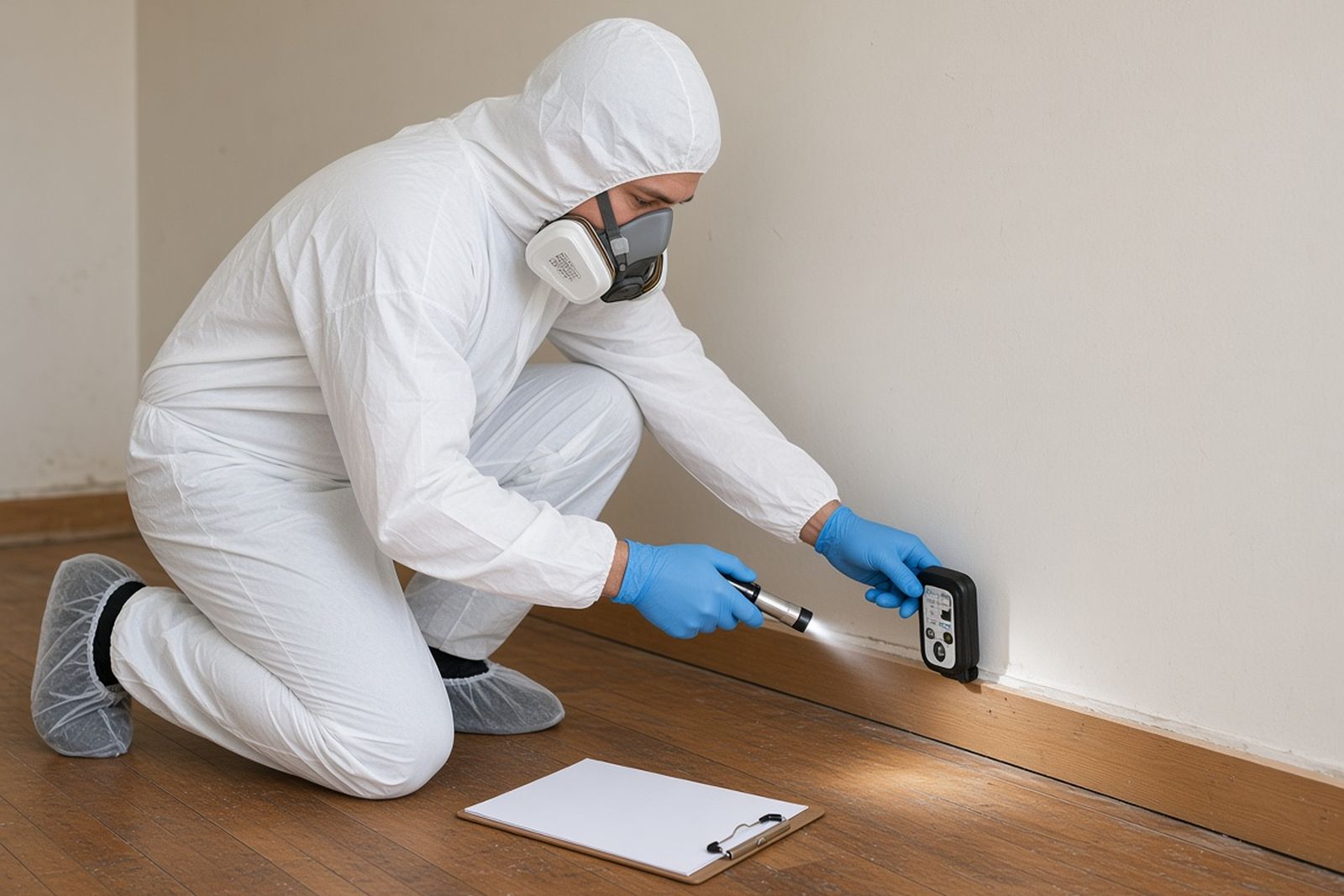
This is not ordinary cleaning, because blood can carry germs such as hepatitis B, hepatitis C, and HIV. It also travels. It runs under baseboards, soaks through carpet into the wood below, and settles into cracks. A trained crew wears protective gear, checks well past the visible stain, and replaces what cannot be made safe.
Many people are surprised that police and medical staff do not clean up once their work is done. That job falls to the owner or tenant, often with no warning. The crew does not investigate or decide what counts as evidence. It does not remodel, either. It makes the space safe, and a regular contractor can rebuild after that.
Each type of work is explained step by step on the crime scene cleanup services page.
Photos
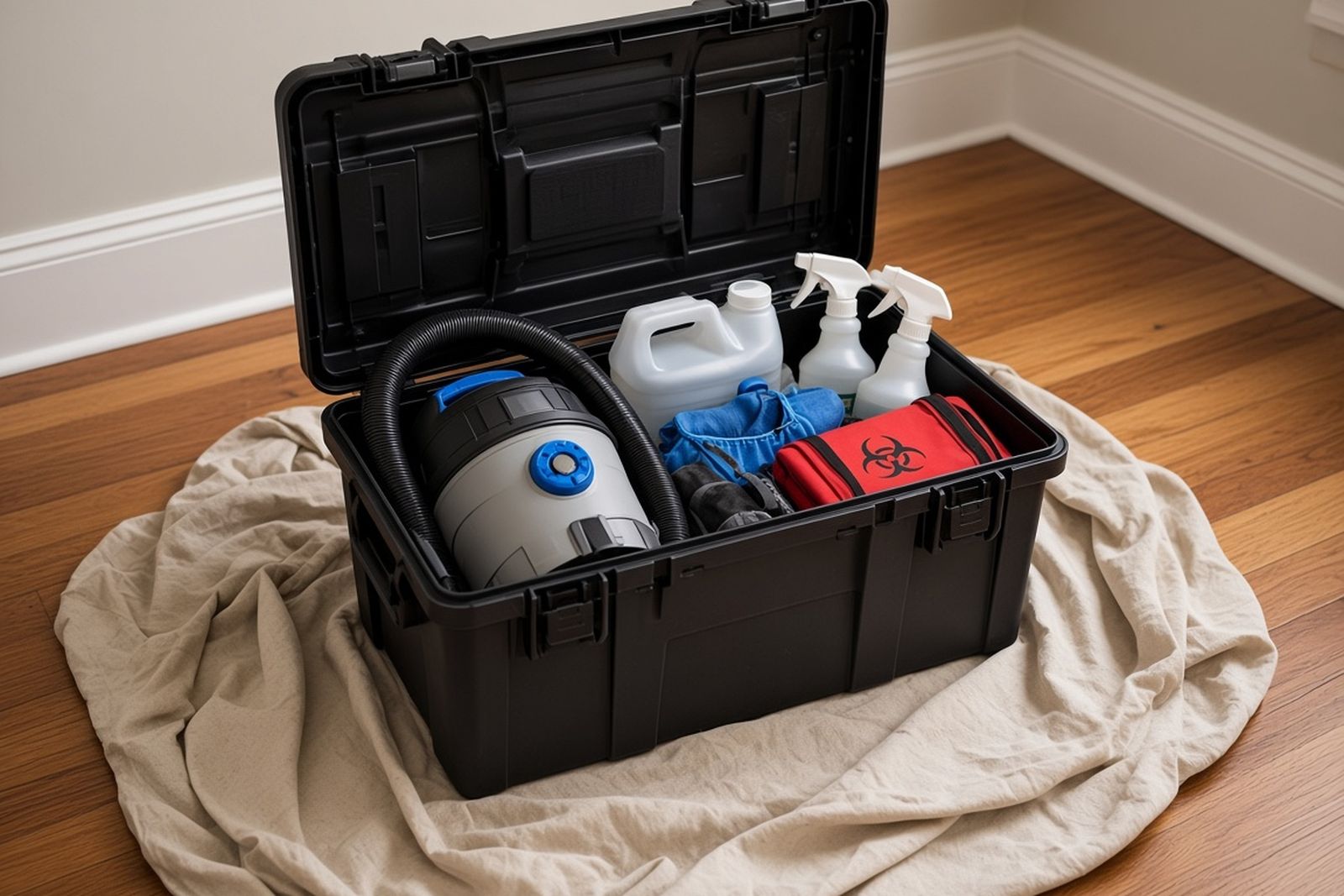
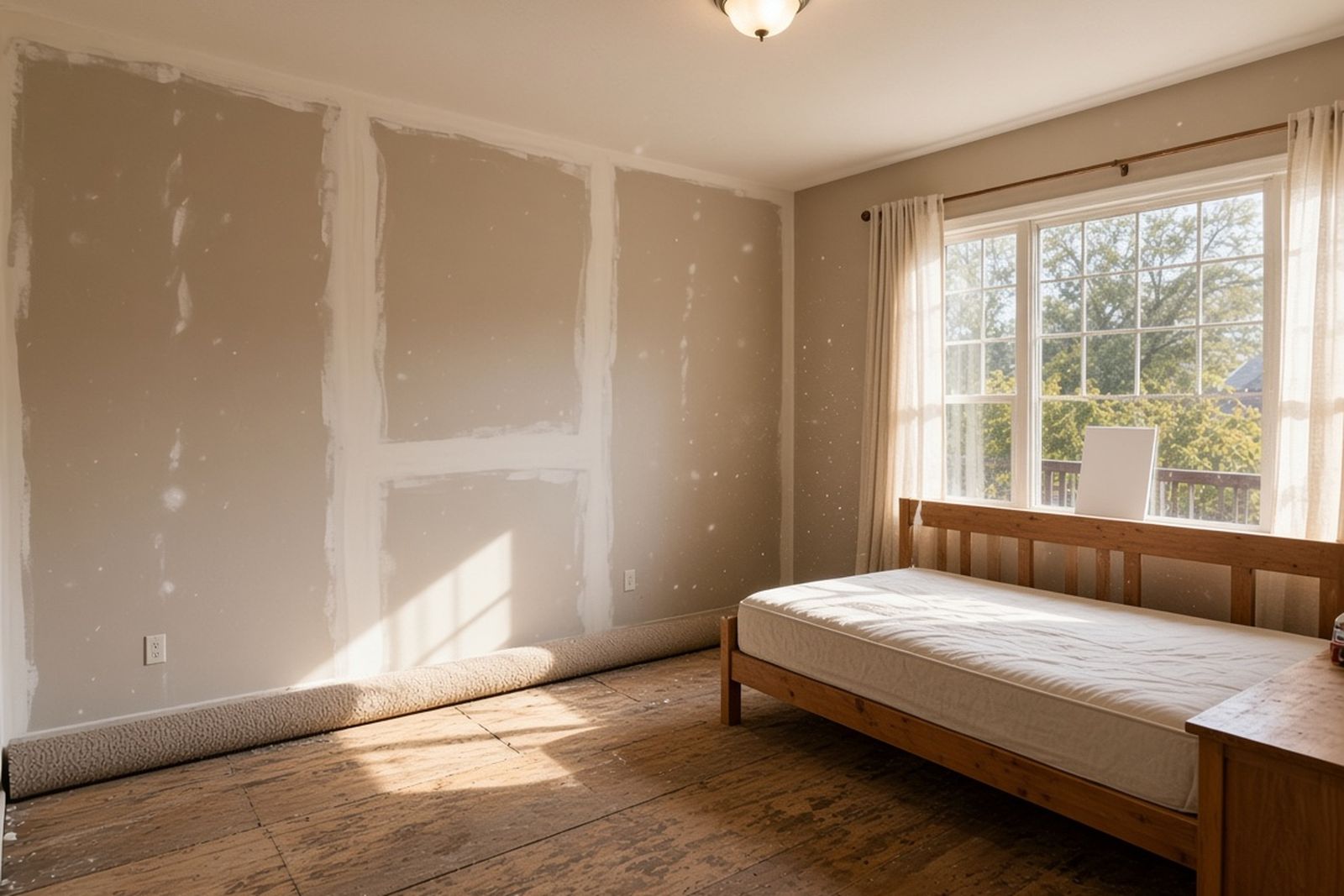
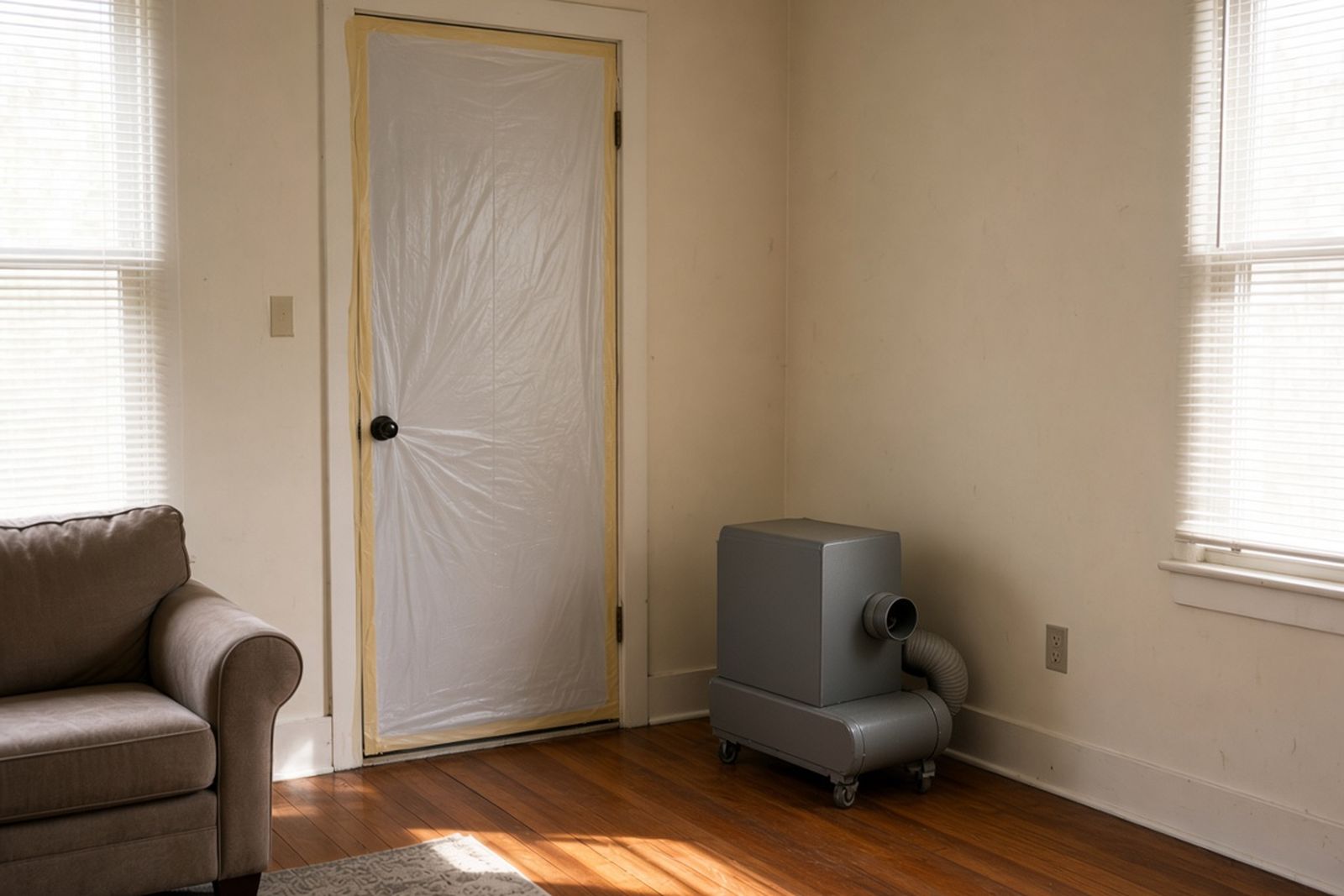
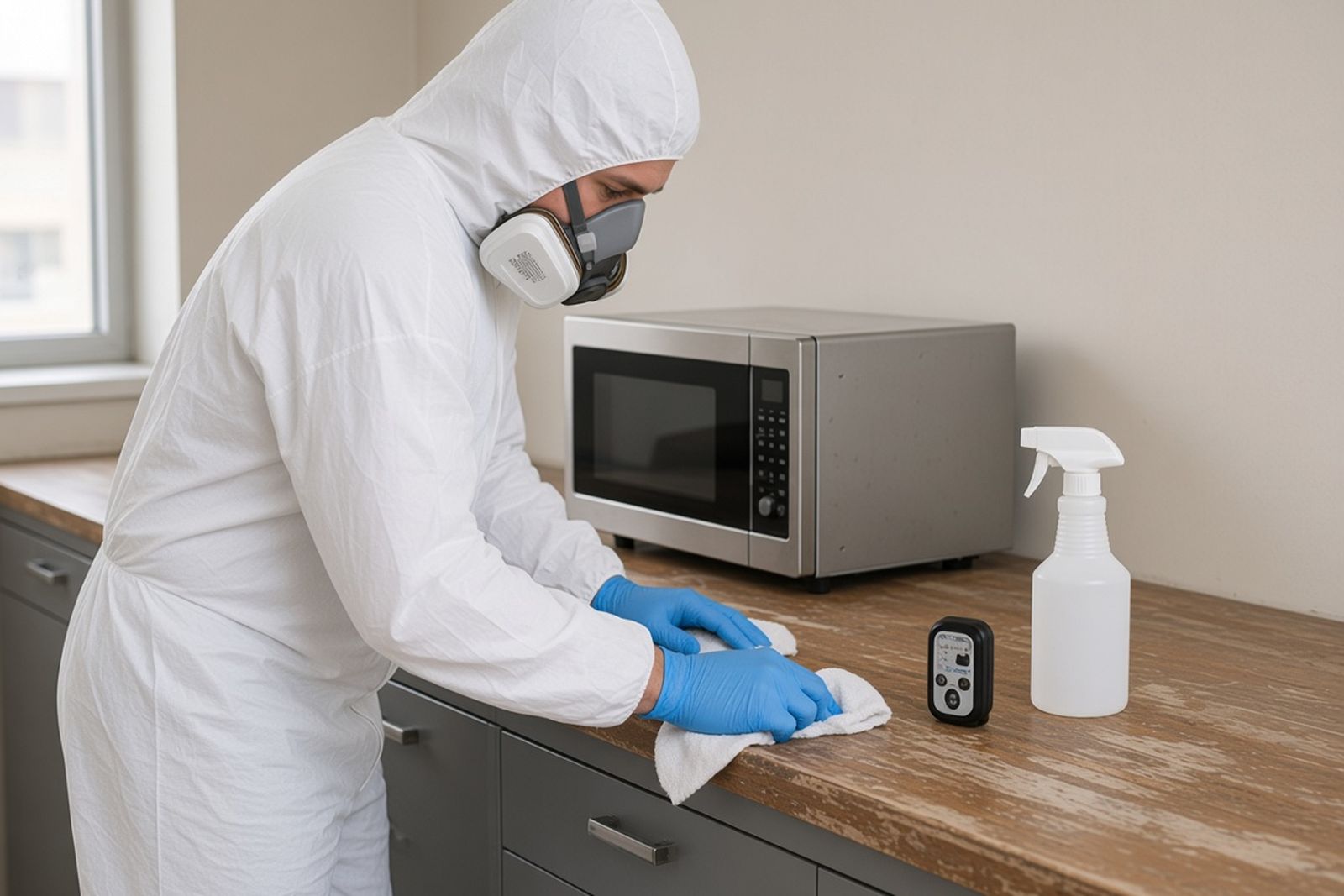
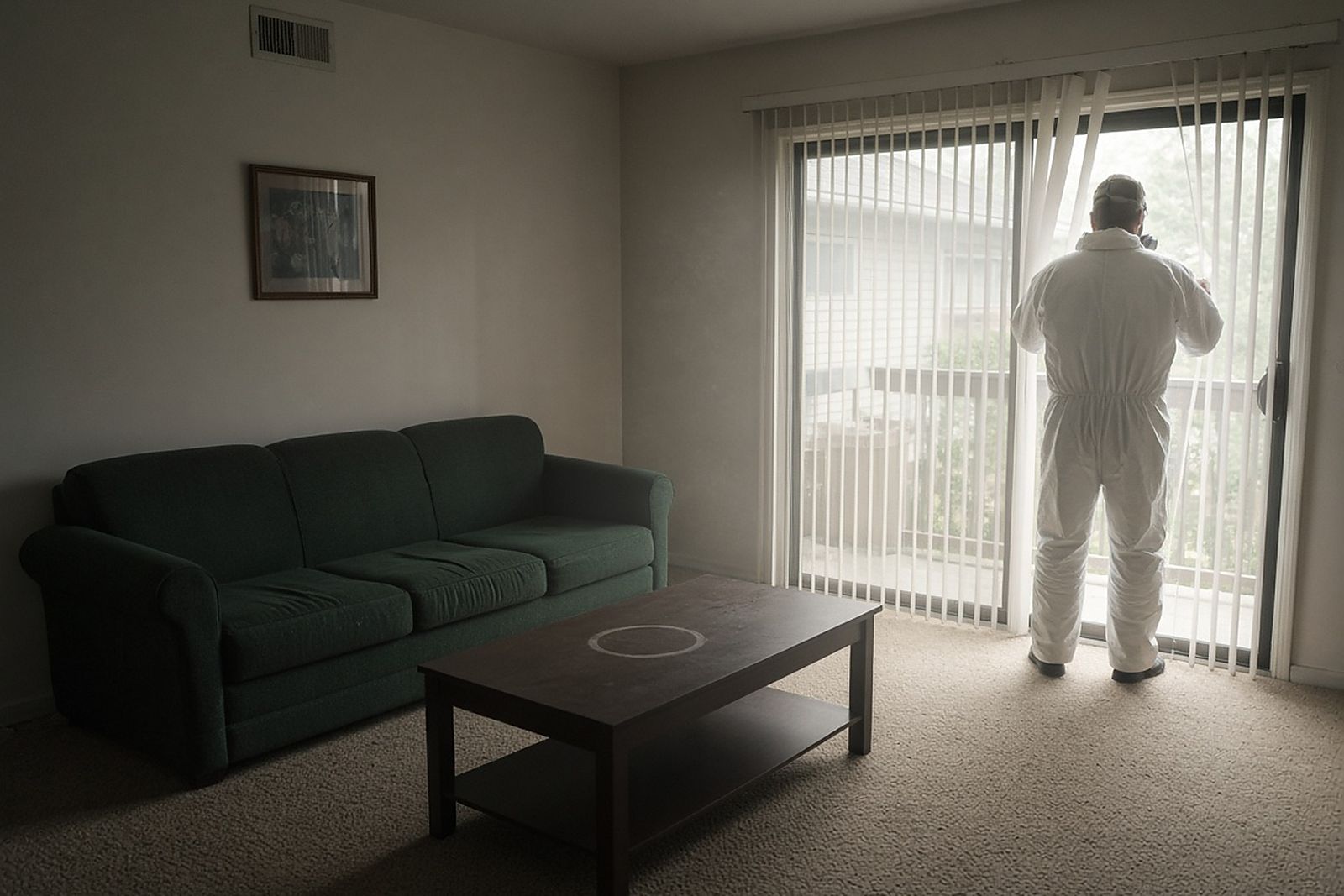
The photos below are illustrations of the gear and setup crime scene crews often use, not pictures from real jobs.
How does the cleanup usually go?
Every scene is different, but most jobs follow a similar order.
- 1
First phone call
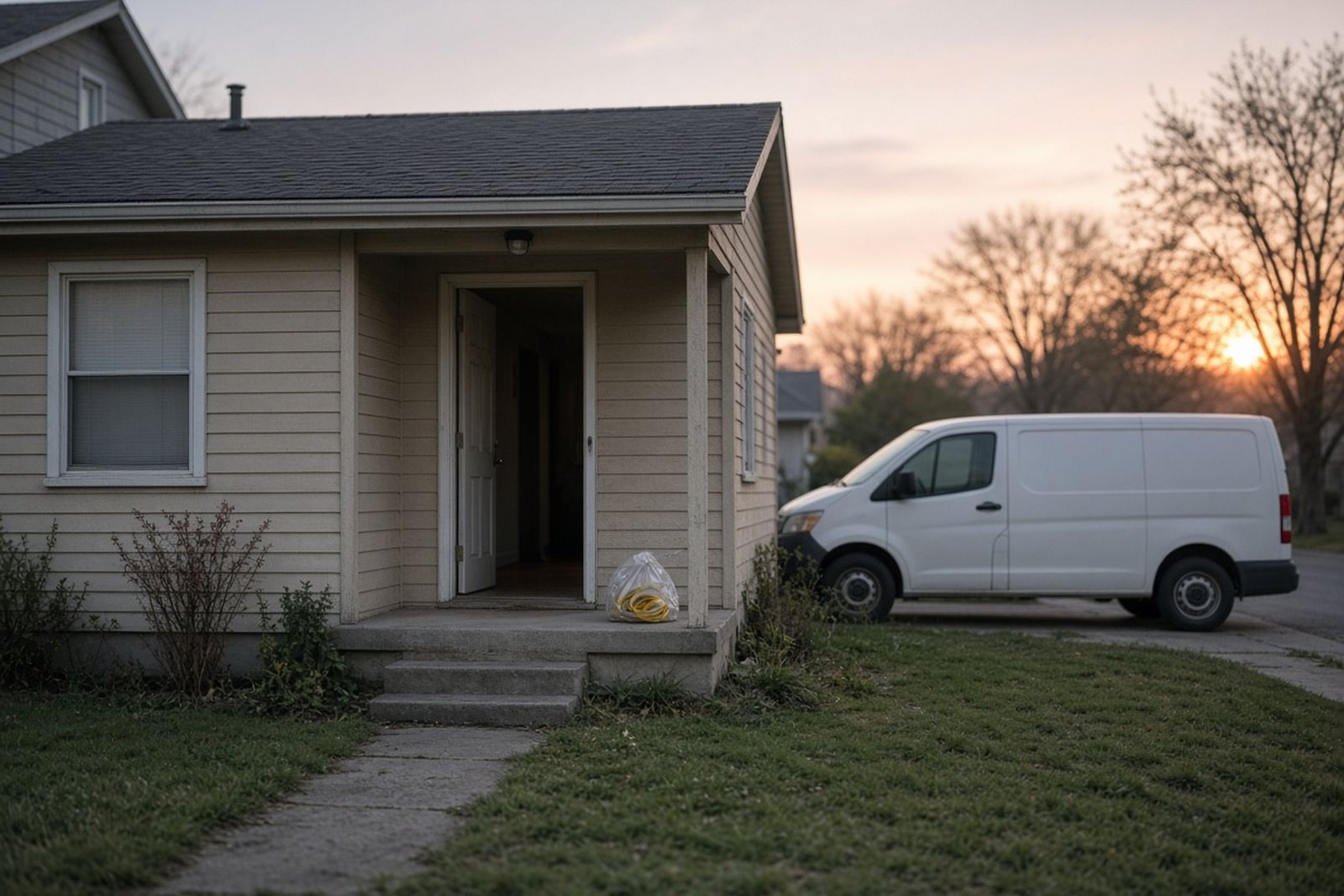
The company confirms that police have released the property. You can ask for unmarked vans if privacy matters to you.
- 2
Walk-through and estimate
The crew checks the affected area and nearby rooms to see how far blood spread. You get a written estimate of what will be cleaned and what will be removed.
- 3
Sealing off the area
Plastic sheets go over doorways, and heating or cooling may be shut off for that area. This keeps dust and germs out of clean rooms.
- 4
Blood removal
Hard surfaces are cleaned, then treated with a disinfectant that stays wet as long as its label requires. Carpet, drywall, or wood that blood soaked into is cut out and bagged.
- 5
Clearing police residue
Fingerprint powder is very fine and spreads easily. The crew lifts it with fine-filter vacuums, then wipes each surface with a cleaner that will not harm it.
- 6
Waste and final check
Bagged waste goes to a disposal site that accepts it. You or your helper get a walk-through, photos, and a written summary.
Crime Scene Cleanup by the numbers
Choices about a crime scene are often made under stress, with little time and even less experience. Facts can help. They show how often these events happen, what cleanup tends to involve, and which health risks are on record. That turns a scary blank into something you can think through. Scale tells you if your case is unusual or common. Cost facts tell you if a quote deserves a second look. Health facts tell you why some shortcuts are risky. The figures here come from named public sources, not from the network's own claims. They are meant to help your talk with a checked provider, not to replace it.
- 30.5%
30.5% reported four or more different traumatic-event types.
Read with care: Recall and country differences; combined categories cannot be separated.
Source: Benjet et al. (2016)68,894 adults; 26 surveys in 24 countries; lifetime reports.
- $70,000
Eligible California crime victims can receive up to $70,000 in total reimbursements for crime-related expenses through CalVCB.
Read with care: Cap covers all expense categories combined; cleanup is subject to its own lower sub-limit.
Source: California Victim Compensation Board (CalVCB) (2022)California, overall per-claim cap as of July 2022
- $4,869
Utah's Office for Victims of Crime paid $4,869 in crime scene cleanup expenses across all claims in its 2024 reporting year.
Read with care: Single state, single year; shows cleanup is a small share of total compensation outlays.
Source: Utah Office for Victims of Crime (2024)Utah, 2024 annual report period
- 2.34
Insurance disputes were associated with depression (aOR 2.34; 95% CI 1.4–3.9).
Read with care: Observational and self-selected; negative-comment denominator is comments, not all insured people.
Source: McKenzie et al. (2022)521 insured, inundated-household respondents from a 2,530-person survey six months after flooding.
- $760,704,172
State VOCA-funded victim compensation programs paid $760,704,172 supporting 453,051 claims in federal fiscal years 2019-2020.
Read with care: Aggregate across expense types; OVC does not publish a national breakdown of cleanup payouts.
Source: U.S. Department of Justice, Office for Victims of Crime (2020)United States, all state compensation programs, FY2019-FY2020 combined
- 32.8%
Firearms were used in 32.8% of aggravated assaults reported to U.S. law enforcement in 2024, and knives or cutting instruments in 16.6%.
Read with care: FBI estimates are based on data from 16,675 agencies covering 95.6% of the U.S. population; expanded homicide details cover only victims with supplemental data reported.
Source: FBI (2024)United States, 2024, aggravated assaults with weapon data
These figures are public research and agency data, not this network's own job records. Keep each number with its population, year and limits; none of them predicts cost, timing or outcome at a specific property.
What will it cost, and who pays?
The price depends mostly on how far the blood reached and what it soaked into. A stain on tile is a very different job from blood that went through carpet into the subfloor. How many rooms are involved, how much fingerprint powder was used, and how much waste must be hauled away also matter. Ask for an estimate that lists these items so you can compare.
Homeowners, renters, and business policies sometimes cover crime scene cleanup, but every policy is different, so call your insurer early. Many states also run crime victim compensation programs that can help pay for crime scene cleanup. These programs usually pay after insurance, often have deadlines, and may need a police report. Check with your state's program, or ask a victim advocate to help you apply.
Keep one folder, paper or digital, for everything. Put in the police case number, the officer's name, and the release date. Add your photos, the estimate, the final bill, and the crew's list of what was removed and where the waste went. Save receipts for costs the crime caused, like new locks or a hotel stay.
How do you choose a company you can trust?
Take a day to compare if you need it.
Questions to ask
- Will you give me a written estimate by room and task? It lets you compare prices and shows your insurer what was done.
- How will you check whether blood spread under the floor or behind walls? Cleaning only what shows can leave germs and odor.
- Who hauls away the waste, and will I get a record of where it went? Blood-soaked waste has disposal rules, and the record protects you.
- Can you show proof of liability insurance and any permits my state requires? Check the papers yourself instead of taking a verbal yes.
- Have you worked with victim compensation programs or insurers before? A company that knows the forms can make your claim smoother.
- What do you do if you find something that might be evidence? A careful crew stops and calls the police instead of throwing it away.
Warning signs
- Pushing you to sign or pay in full before anyone has seen the scene.
- A firm price given over the phone with no walk-through.
- Vague answers about waste, or a plan to put bloody materials in regular trash.
- Promises that insurance will pay everything, or offers to skip your deductible.
Checking a company you already have in mind? Work through the provider vetting checklist.
Can you clean any of it yourself?
Many families want to clean up so no one else has to see it. But blood can carry disease, and household cleaners are not made for it. Most of the risk hides where you cannot see, like under flooring or inside a cushion. A quick wipe can leave germs behind and push stains into wood or grout.
Your own well-being counts too. Seeing where someone was hurt can stay with you. Handing this job to a crew is a sound choice, not a failure. If you feel shaken in the weeks ahead, a victim advocate or your doctor can point you to support.
Usually fine to do yourself
- Close doors and keep children and pets away from the affected rooms.
- Once police allow it, collect medicines, papers, or valuables from rooms that were not touched.
- Start a folder for estimates, receipts, photos, and letters about your claim.
Leave to a trained crew
- Cleaning blood from floors, walls, or furniture, even small spots.
- Pulling up carpet, pad, or any material that blood soaked into.
- Vacuuming or wiping fingerprint powder, which irritates lungs and smears easily.
- Bagging and throwing out anything with blood on it.
Not sure where your situation falls? The DIY risk check asks eight yes-or-no questions.
Free crime scene cleanup planning tools
Cost Range Estimator
Quotes for crime scene cleanup can look wildly different for what seems like the same job.
Provider Vetting Checklist
Choosing a cleanup company after a crime usually happens fast.
Insurance Claim Organizer
Insurance claims after a crime are often filed by someone who has never made a property claim.
First 24 Hours Planner
The first day after police hand back a crime scene is when the most serious mistakes happen.
Waste & Disposal Classifier
After a crime, the question of what to do with soiled items comes up sooner than people expect.
DIY or Call a Pro? Risk Check
Many people think about cleaning a crime scene themselves, especially when the damage looks small.
What research has found
Findings from published studies of people and properties in situations like this one. They describe what researchers observed in a specific group; they are not predictions for your case.
Community gossip made some participants feel scrutinised rather than supported.
A quarter did not upgrade home security afterwards.
Isolation raised concerns about getting to work and reaching emergency medical care.
Crime Scene Cleanup community polls
Every count is a real visitor vote; nothing is seeded or padded. One vote per poll per device, and you can change your answer.
What was the hardest thing to figure out in the first day after the scene was released?
Which type of incident brought you to this topic?
Before reading about it, how did you view cleaning a small blood stain yourself?
Common questions about crime scene cleanup
Do the police or the city clean up after a crime?
In most places, no. Police collect evidence and then release the property, but the cleanup is left to the owner or tenant. Many families only learn this when they get the keys back. A victim advocate can share names of local companies and help with a compensation claim. In a rental, the landlord usually arranges work on the building itself.
Can I stay in the home while the cleanup is going on?
Often you can stay in rooms that were not affected, as long as the work area is sealed off. Some people stay with family for a few days anyway, because hearing the work can be hard. If odor machines need an empty space, you should be told ahead of time when to leave and return.
What happens to belongings that have blood on them?
Hard items like dishes, metal, or glass can often be cleaned and kept. Mattresses, couches, and clothing are harder, because blood soaks deep inside. A good crew asks before throwing anything away and sets aside photos, papers, and keepsakes for you. Ask the crew for a written list of every item removed.
Will the neighbors know why the crew is there?
They do not have to. Many companies can arrive in unmarked vans, wear plain clothes to and from the door, and carry waste out in plain containers. In an apartment building, the manager may need to know about the work so hallways can be used safely, but what happened can stay private.
How soon after the police leave can the cleanup begin?
Work can start once police say the property is released, and not before. Release can come within hours or take several days. Ask the detective to confirm the release clearly. Starting soon after release helps, since blood keeps soaking into floors over time. Still, taking a day to get two estimates is usually fine.
Is fingerprint powder harmful to breathe?
Fingerprint powder is made very fine so it clings to surfaces. That also means it floats in the air and settles in vents, fabric, and carpet. Breathing it can bother your nose, throat, and lungs, especially with asthma. Some powders stain when wet, so a damp cloth can make marks worse. Let a crew vacuum it with fine-filter equipment first.
What if I already started cleaning before I knew any of this?
Please do not blame yourself. Stop, wash your hands and any skin that touched blood, and bag the cloths or towels you used. Leave the bag closed in the affected room. Tell the company what you cleaned and with what product, so they know where to look. If blood reached a cut or your eyes, call your doctor.
More on crime scene cleanup
Crime Scene Cleanup services
See what crime scene cleanup covers, from blood and police residue to tear gas and cars, and what the work does not include.
Costs explained
What drives the price, published cost ranges, and how to read a written quote line by line.
Insurance and payment
Which policies may respond, how to document a claim, and what to do if coverage is denied.
Planning tools
Planners, checklists, and guides you can click through for the days after police release a crime scene, each built for this situation.
Community polls
See what other readers think about the choices people face after a crime at their property, from picking a company to what surprised them most.
Knowledge quiz
Test what you know about scene release, sealing off the area, disinfecting, waste, and checking the work, with a short quiz and a plain study guide.
Articles and resources
Read about common kinds of crime scenes, like a break-in where someone got hurt, tear gas left after a standoff, or the mess from a police search. Written for owners.
Field guides
Longer step-by-step guides on confirming scene release, working with insurers, reading a cleanup job plan, and keeping people safe while work is underway.
City guides
Find local facts and reach companies by area, with reminders that license and disposal rules vary by state and county.
Related guidance sites
Each site covers one situation. If yours overlaps, start with the closest match.
Homicide Cleanup (After Scene Care)
Clear, careful guidance for the time after the investigation ends.
Biohazard Decontamination (Biohazard Care Guide)
Blood, sewage, or a bad outbreak of illness: what to do and whom to call.
Tear Gas Residue Cleanup (Residue Recovery Guide)
The burning powder stays behind. Here is how to get your home back.
Get answers by email
Send a short message about your crime scene cleanup situation. Your request is sent to the follow-up inbox. A coordinator can reply by email. There is no obligation.
Your request is sent to the follow-up inbox. A coordinator can reply by email.
If anyone is hurt or in danger, call 911 first.